
 Français
Linen is such an ancient cloth in the world, but it is cherished today for its wonderful qualities. It is very light and airy. Linen has been used by humans for thousands of years, but it has now been almost overtaken by man-made materials due to their mass production, lower cost, greater availability, and freedom from wrinkles.
But still, some textile lovers like to work with natural fabrics—and we belong to them!. Linen is becoming more popular. The fabric is harmless to you and, at the same time, more eco-friendly. It is a wonderful option for allergy sufferers and those with sensitive skin.
What is linen fabric?
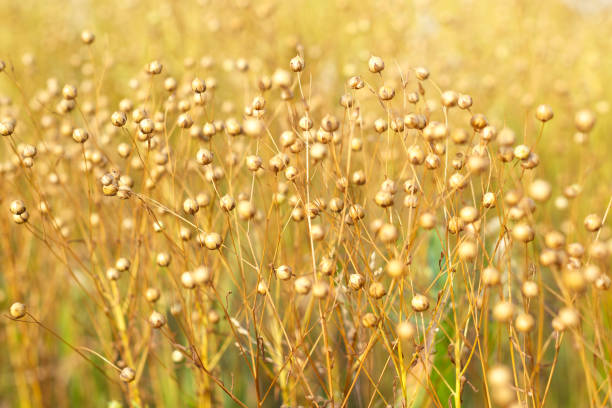
Linen is a plant fabric that is derived from the flax plant’s fibers. Since the fibers are composed of the stem of the plant, they are extremely resilient and biodegradable. It is cool and refreshing during hot weather.
Top producers of flax and the environmental friendliness of linen
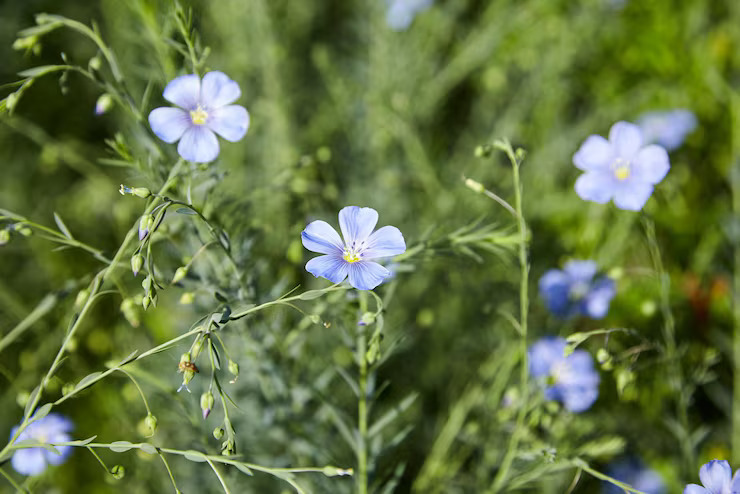
The majority of the globe’s production of flax fiber, 80% to 85%, is from Western European nations like France, Belgium, Ireland, the Netherlands, and Spain. These nations have a rich history and favorable conditions for cultivating premium-quality flax.
Apart from Western Europe, other significant linen producers are Lithuania, Egypt, Russia, and China, which make a considerable contribution to the world linen market.
The flax plant requires less maintenance, as it does not usually require irrigation, pesticides, or fertilizers to grow annually. This makes it a sustainable crop that can enhance soil conditions over time.
How is linen fabric produced?
Linen, being a natural product, provides comfort and durability. The following is a step-by-step guide.
1. Cultivating the flax plant
The flax plant produces linen and is cultivated in cool and moist environments. Flax tends to grow rapidly and does not need much water or pesticides.
2. Harvesting
Typically, after 100 days, flax is mature and is pulled out of the soil. We don’t have to cut to maintain fibers as long and as strong.
3. Retting
Once the flax plants are pulled out, there is still a hard outer coating on the stems. We must loosen up or break down the outside in order to obtain the soft, valuable fibers within the stems. This serves to separate the usable fibers within the stem.
4. Breaking and scutching
Dry stalks are broken to get rid of the woody portion of the stem using rollers or wooden implements. This is done to break the stems into fragments. Afterward, the broken woody pieces are scraped off. This is referred to as scutching. What remained were the long, soft flax fibers, which are the ones we utilize in the production of linen.
5. Hackling
The hairs are combed to take away any remaining coarse bits. This creates a flat, smooth material that can be spun.
6. Spinning
The fibers are spun into yarn. This yarn may be thick or thin, depending on what it is intended to be used for.
7. Weaving or knitting
Finally, the yarn is woven or knitted into sustainable linen fabric. The end product of the process is a strong, airy, and natural fabric.
History of linen
Linen is among the world’s most ancient textiles. It is about 8,000 to 10,000 years old, much before the advent of modern-day clothes.
It all began in ancient Egypt, where linen was extremely special. The Egyptians wore it to create clothing and wrapped mummies with it since they considered it pure and clean. It is critical in preserving the bodies, and it even lasts for thousands of years in a tomb.
Then, later in ancient Greece and Rome, individuals used linen to keep themselves cool during warm weather. In the Middle Ages in Europe, European linen fabrics became a staple in households. People utilized it as clothing, bedding, and table tablecloths. Indeed, most of the linen was still handmade in small villages.
In the 1700s and 1800s, machines simplified the production of linen. But cotton soon became the favorite, and linen began to lose its position.
Synthetic materials like polyester, rayon, and nylon came into vogue during the 1900s. They were economical, wrinkle-free, and available at hand, but not as natural or breathable.
Linen is on the rise today. It is becoming popular again due to its wonderful characteristics.
Properties of linen fabric
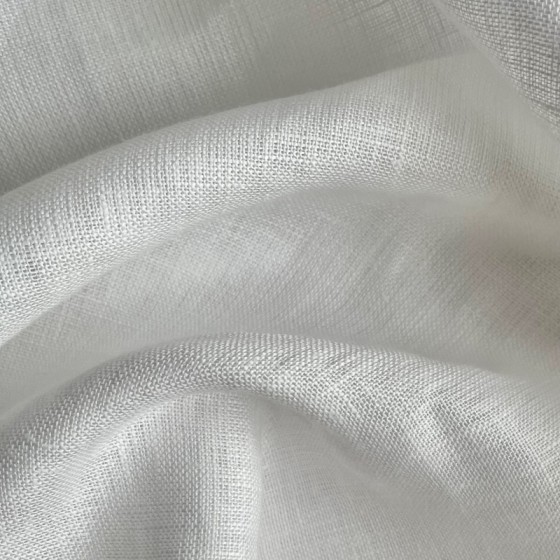
1. Antibacterial, antifungal, and hypoallergenic
Linen naturally repels bacteria. Bacteria do not develop easily on it. The fabric is fresher and cleaner for longer. As odors are usually caused by bacteria like dust mites and mold, linen also minimizes the bad odors.
In addition, linen is also hypoallergenic, making it an excellent option for individuals with sensitive skin or allergies. It’s chemical-free and gentle on skin. It can be safe to be used daily, such as for home decor items, clothes, bedding, and so on.
2. Biodegradable and sustainable
Linen is both sustainable and biodegradable, which makes it an eco-friendly fabric. Unlike synthetic materials that take hundreds of years to break down, linen comes from the flax plant and naturally decomposes in just a few weeks.
3. Moisture-wicking and dries quickly
Linen possesses great moisture-wicking qualities that can pull sweat in and release it into the air in a very short time. The clothing remains dry and comfortable, even in warm or humid climates. It also possesses quick-drying qualities, meaning that the clothing does not remain wet for long.
4. Thermoregulating and breathable
Linen is able to keep your body comfortable. If it is warm, air is able to circulate through the cloth, which helps to keep you cool. During the cold weather, it insulates to help you stay warm. This temperature-regulating nature feels comfortable to use every day throughout the year.
As linen comes from natural flax fibers that are loosely woven and hollow in structure, it makes it easy for air to circulate through.
5. Long-lasting and machine washable
Linen is durable and long-lasting. It can also be machine-washed, since the majority of linen clothes are washable. Even after frequent washing, it remains good and does not lose its shape. Indeed, it feels softer and more pleasant.
Types of linen fabric
1. Plain woven linen
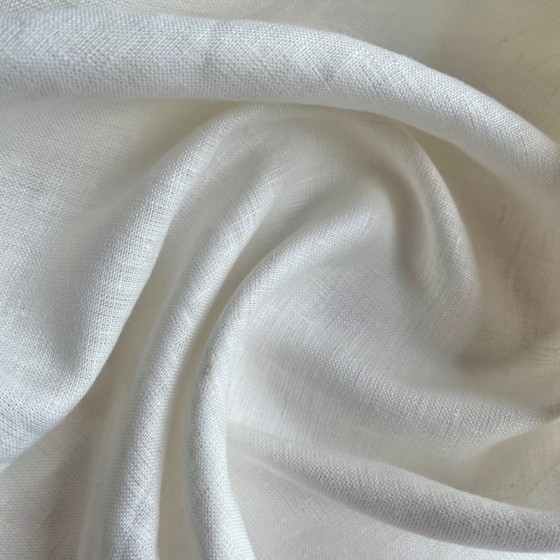
Plain woven linen is produced with a basic over-and-under weaving technique, which provides it with a flat texture. It is light, airy, and durable. The plain weave allows air to pass through easily, which makes it comfortable to wear in warm weather.
2. Damask linen
Damask linen is woven with a jacquard loom. It is a specific machine capable of weaving complex and detailed patterns like flowers, swirls, or geometric shapes. The fabric has a tight weave, which offers smooth textures. For this reason, products such as tablecloths, dish towels, and napkins are used in restaurants to decorate the tables.
3. Loosely woven linen
There are small spaces between the threads, which make the cloth light, airy, and extremely breathable. Due to its open structure, it is applied to lightweight summer clothes, scarves, or curtains.
4. Sheet linen
Sheeting linen is heavier in weight and looser in weave. It is soft and is also long-lasting. You can use it for bedding, cushion covers, and pillowcases. It tends to have a tighter weave, making it silky against your skin. It is also durable and long-lasting, hence keeping you cool and comfortable during sleep.
Conclusion
We hope that you have now gained a better understanding of the sustainable linen fabric. As you are aware, it is an extremely old and natural fabric used worldwide. Although it was substituted with affordable synthetic materials for some time, more people are returning to using linen due to its incredible qualities and characteristics. Instead of using many synthetic materials, one linen product can do its job. It is more durable and also lowers the carbon footprint.
Are you looking for high-quality natural products and textiles?
At Fibre Bio, we are committed to delivering natural fabrics and ready-to-dye products that are safe for you and also more environmentally friendly. We want to make it easier for people to make better choices and access our eco-friendly fabrics and products with NO MOQ.
Additionally, all our linen textiles are certified by OEKO-TEX, and organic cotton textiles are certified by GOTS. We ensure that each product from us is produced responsibly and to international safety standards.
For further details regarding our natural products and textiles, please reach out to us at [email protected].