
 Français
Natural or organic dyes are colors extracted from various natural resources, including plants, insects, and minerals. Unlike synthetic dyes, natural dyes are generally biodegradable and have a much lower impact on the environment. Various factors can affect the final results of fabric dyeing and printing.
From the dyer’s expertise to the quality of the ingredients selected, the type of “recipes” used for the mordanting or dyeing stages, and the quality of the fabric, each step has an impact on the final result. If one of these steps is not followed correctly, it can have a negative impact on the final color and overall result.
In this article, we want to explain why the quality of the fabrics used for dyeing plays a key role in achieving successful dyeing or printing results.
Dye absorption
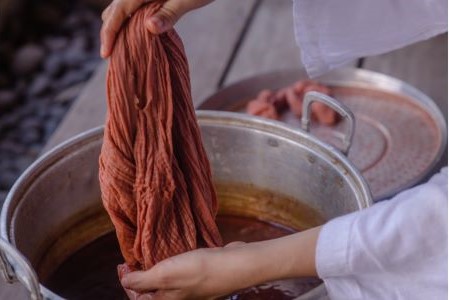
High-quality fabrics made from natural fibers such as organic cotton, linen, silk, wool, etc. have a greater affinity for natural dyes. Natural fibers have unique structures that allow them to bind more effectively with dye molecules. This results in richer colors and better overall color saturation.
On the other hand, lower-quality fabrics, which have had large amounts of chemicals used in their production, may absorb dyes unevenly, create visible spots after dyeing, or require excessive amounts of dye to achieve the desired shades.
Colorfastness
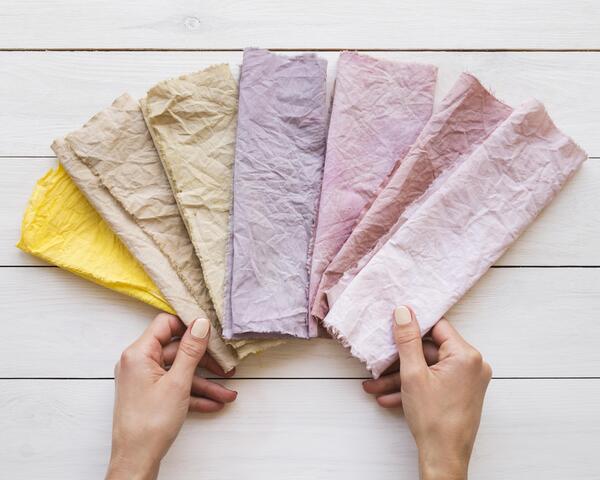
The durability of color achieved through natural dyeing is influenced by the fabric’s quality. High-quality fabrics tend to have better colorfastness properties, meaning they resist fading when exposed to light, washing, and other environmental factors. Poor-quality fabrics can cause rapid fading or color bleeding, which affects the longevity of the dyed item.
Texture and feel
High-quality fabrics generally have a richer texture and feel against the skin, particularly on products such as clothing and other textiles that come into direct contact with the skin. Natural dyes enhance these qualities by giving high-quality materials a soft finish, while lower-quality materials can become abrasive or unpleasant to the eye after dyeing.
Environmental impact
Higher-quality materials often come from more responsible sources that prioritize environmentally friendly practices over the mass production methods associated with lower-quality textiles. Natural dyers contribute to waste reduction and the promotion of sustainable development by choosing high-quality fabrics for natural dyeing processes.
Reproducibility of dyes
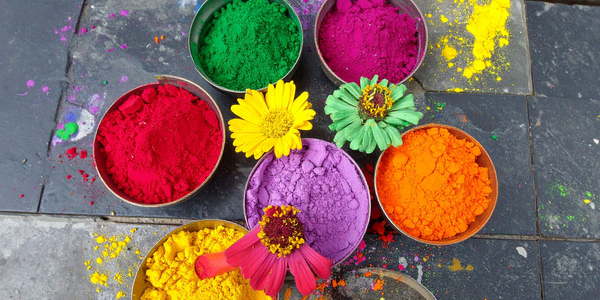
Natural dyes can be unpredictable due to variations in plant material, extraction methods, and environmental conditions during dyeing. However, starting with high-quality fabrics can help mitigate this variability by providing a consistent base on which colors can be applied more reliably. This consistency allows dyers to more effectively reproduce specific shades across different batches.
At Fibre Bio, all our fabrics are made from high-quality natural fibers and are easy to dye. We offer different types of natural fibers, such as organic cotton, linen, silk, wool, etc., which have been specially selected for natural dyeing. We are the solution for all natural dyers looking for high-quality fabrics that blend well with natural dyes, improve dye absorption and colorfastness, guarantee better texture and comfort, and support sustainable practices.
For inquiries or bulk orders, please email us at [email protected].